
Search intent
Classify the likely user need behind the topic so editorial framing can match the type of question being answered.
PressAI can combine search-intent classification, Google Search Console context, configured SERP analysis and AEO/GEO guidance with the article workflow so discoverability is considered alongside evidence and editorial quality.
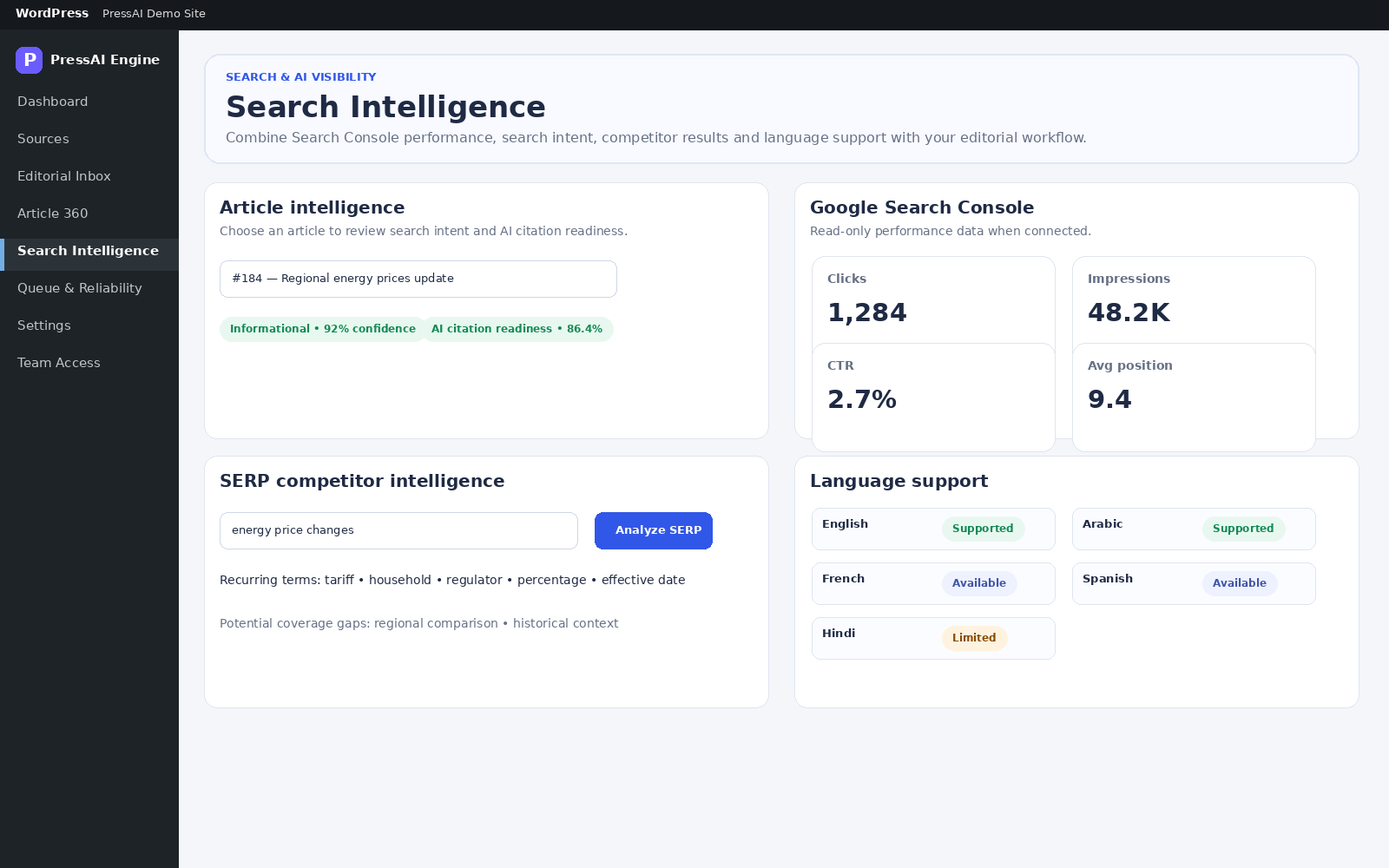
PressAI does not treat search as a separate checklist at the end. When the relevant connectors are configured, search signals can inform the same editorial workspace that already contains the story, evidence and publishing state.
Classify the likely user need behind the topic so editorial framing can match the type of question being answered.
Use first-party performance context when the site owner connects the required Search Console credentials.
Review competing search results when a supported SERP provider has been configured by the customer.
Assess readiness for answer-oriented and generative search experiences without presenting that guidance as a ranking guarantee.
The purpose of Search Intelligence is to help the editorial team understand demand, gaps and discoverability context. It does not guarantee rankings and it does not replace sound editorial judgment, technical SEO or site-level search strategy.
Clarify what the searcher is likely trying to accomplish with the query or topic.
Use Search Console context where available to understand current performance and opportunity.
Use a configured provider to understand the current result landscape and content patterns.
Use the resulting context inside the editorial and publishing workflow rather than as an isolated report.
Revisit an existing story with current demand and performance context before choosing the next update angle.
Use intent and first-party data to identify what information a long-lived article should answer more clearly.
Give editors discoverability context before the publishing decision rather than after the article is already live.